
View mode
- Cards
- List
Unlocking Ulva: A Community Barge to Connect, Create and Thrive
2025-06-02 • No comments • • Regeneration Capital Grant Fund
North West Mull Community Woodland Company (NWMCWC) proposes to purchase and operate a community-owned barge to serve the Isle of Ulva. This transformative asset will unlock essential access for people, goods, vehicles, livestock, and materials - enabling regeneration, resilience, and economic growth on a fragile, remote island currently constrained by limited marine transport.
Ulva is a roadless island off the west coast of Mull, with no bridge and only a passenger ferry. The community is entirely reliant on the support of a local fish farm for occasional barge support - help that has been generous and invaluable over the last few years, though is naturally limited. This creates a significant barrier to regeneration, preventing progress on key projects and undermining the island’s long-term sustainability.
The barge will address this infrastructure gap and enable a range of community-led initiatives, including:
-
Heritage restoration, including the movement of scaffolding, stone, and tools to repair historic buildings like Ulva House or Telford-designed church, and other community buildings.
-
Sustainable land management, supporting crofting and farming by transporting livestock, feed, and agricultural supplies, as well as help with the removal of unused and broken equipment and machinery.
-
Resident-led business development, giving islanders the infrastructure needed to start and sustain their own small enterprises - enabling self-sufficiency and reducing dependence on external services.
-
Contractor and service access, allowing building and infrastructure work to proceed without excessive private transport costs.
-
Emergency resilience, offering an alternative logistics route in the event of ferry failure.
-
A community-led initiatives like Ulva Producers’ Market, connecting local growers, makers, and visitors in a shared island space.
-
Cultural and community events, such as pop-up exhibitions, and other events that require transporting bulky or heavy equipment.
As one resident said, "A community barge would secure the long-term future of the farm and ensure we’re no longer totally reliant on a third party to move livestock or machinery. It would also open up opportunities for diversification. On a personal level, it would create a more sustainable and flexible connection between Ulva and Mull—helping our community grow, thrive, and engage more with the wider community of north-west Mull.”
The barge will be community-owned, maintained by NWMCWC, and operated in partnership with residents and local businesses. It will have multiple uses and function flexibly, supporting both everyday needs and long-term community goals. Critically, it provides a foundation for further regeneration efforts, addressing a clear case of market failure and enabling transformational change.
The project will be ready to commence once capital funding is secured, with delivery anticipated over 12–18 months, including procurement, compliance, training, and launch.
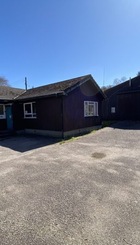
Creating a Cairnbaan Community Hub. Refurbishment of the old forestry buildings
2025-05-30 • No comments • • Regeneration Capital Grant Fund
1. What we want to achieve.
The Cairnbaan Community Trust, (SC052905) wants to refurbish the forestry buildings to provide a community gathering point and flexible workshop and event spaces. We want a community hub that can be used by the community for education such as crafts and Gaelic, health e.g. yoga and other activities, recreation and social gatherings, inside and outside and temporary office space for local entrepreneurs.
Our priority is the smaller of the two buildings which will provide space for community events and workshops, social meeting space, hot desks and a community kitchen. There is external space that can be developed to provide a community garden and outside event space. It is hoped in the future the larger of the two buildings can be developed to provide space for larger workshops and events.
We have divided the work into phases and we are currently seeking funding for phases 1 and 2.
Phase 0: This covers the procurement of the forestry buildings under a community asset transfer funded by the Scottish Land Fund and we have secured initial funding for essential repairs to both buildings to make them safe and weatherproof. The work will start when we take ownership on the 01/08/2025.
Phase 1: Is the refurbishment of the smaller building. This phase will change the internal layout of the building to create flexible spaces. This entails new partitions, doors, lighting and upgrade to the heating. Additional facilities, external and internal, will be needed for disabled and users with special needs. We also aim to fit a community kitchen and social space for coffee mornings. Finally we need to replace windows and install new furnishings and fittings.
Phase 2: Is the landscaping and provision of a community garden and outdoor space.
Phase 3: Is the refurbishment and fitting out of the larger building. In this phase we also plan to look at energy efficiency improvements, e.g. heat pumps and solar panels.
2. Why our project is needed
Currently there is no community centre to provide a focal point or resources for the community. There is a risk of social isolation amongst our older population and there are no facilities for the young people in our village. Community cohesion is being eroded.
We commissioned a feasibility report through Community Enterprise which highlighted the following points. Accessing facilities is difficult without a car, the minimal bus service is a school service with no evening or Sunday services. There are no shops, medical or other services in the village. Despite scoring highly in other domains the area falls into the 10% most deprived areas in Scotland in terms of access to services in relation to the Scottish indices of multiple deprivation. Feedback from local people highlighted that a primary need in the community is an indoor social area and meeting space.
3. The positive changes our project will bring
Our vision is to reduce isolation, improve community life and reflect the cultural, environment and historic heritage of the area. The current priorities for the CCT are.
- Bringing the community together to enable opportunities for social interaction and growth.
- Advancement of arts, heritage, culture and science.
- The provision and organization of recreational facilities to improve the quality of life for the community.
- Improving the environment including education about the environment, culture and history.
- The relief of thos in need either because of age, ill health, disability or financial hardship.
The refurbishment of the buidings will provide a focal point for the community and the resources to bring the community together especially those that feel isolated. It will provide resources for all ages across the community and give everyone opportunities for development and a sense of purpose and indentity.
Through current engagement with the local community we have already identified skills and volunteers that can contribute to the refurbishment which will foster community involvement from the outset
4. How long will our project run
Phase 1 and 2 of the project will start on: 05/01/2026
The project will run for: 15 months
Our Business plan and the Feasibility report are available on request. Unfortunately the file size was too big to attach.
Lorn and Oban Reuse Initiative - Renewals and Expansion Project
2025-05-30 • 1 comment • • Regeneration Capital Grant Fund
What we want to do - Lorn and Oban Reuse Initiative (LORI) is our long-standing furniture reuse project based in Oban, serving communities for over 15 years. The project, which aims to achieve a Zero Waste society, diverts furniture, household goods and electricals etc. into reuse and before [these] unwanted items enter the waste hierarchy. In the last 12 months, LORI has supported over 11500 customers including businesses, individuals and families. Those in poverty and personal crisis, those displaced by war in Ukraine and communities challenged by the ongoing cost of living crisis. “Such a fantastic way to reduce wasting perfectly good products. Furniture is top quality and the staff I met were friendly, welcoming and incredibly helpful.” CustomerThis is an exciting period for our charity, as we are planning a major expansion of our work to enable us to better support the growing number of people who come to us for help. Our plans are well advanced including planning consent and building warrant for the proposed improvements and renewals to increase available floor space to meet the growing demand for reuse goods. GRAB has set aside reserves to contribute to the cost of these improvements.Under this grant we propose to move forward rapidly with the project. Available match funding already secured will support project management and admin resources and back LORI during any disruption to trade while improvements take place. Under this grant, captal funds will be deployed to prepare groundworks and the foundations to accommodate new modular buildings, the purchase of new buildings to replace derelict and delapidated units and much-needed welfare facilities. And extensive refurbishment to an existing building. Why the project is needed - In Argyll and Bute, landfill accounts for around half of the Council’s annual production of Carbon Dioxide equivalent emissions (CO2e). (Source: Argyll and Bute Council Decarbonisation Plan 2021). Positive changes will the project bring about - Planet – Tackling the climate emergency, LORI reduces landfill; 45% of greenhouse gases come from products we use and purchase. Saving valuable resources from landfill, LORI reduces the communities’ carbon footprint and cuts emissions. In Oban and Lorn approx. 858 tonnes of Municipal Solid Waste is produced each year. Currently just over 10% or 86 tonnes is diverted through reuse by The GRAB Trust. People – supporting local people and creating jobs, LORI supports communities to utilise existing resources, LORI has steadily increased volumes diverted from landfill each year; diverting over 450 tonnes from landfill in the last 8 years. The initiative sustains 7 jobs and 12 regular volunteers. Pounds – Strengthening the circular economy we offer low cost, high quality furniture and homewares to everyone as a sustainable, low cost alternative to buying new. LORI supports the Circular Economy by keeping existing resources in use for longer and our not-for-profit community enterprise now recirculates over £120,000 in our communities annually. Reducing the tax burden, LORI decreases landfill tax, saving local taxpayers over £8,000 annually. Place – engaging and empowering communities LORI is a place where ideas flourish. We support community groups and partners in the third sector. We help businesses like cafes, hotels and Air B&B furnish their premises. We help communities to share and to learn new skills; reusing and repairing is a creative way to try new things, gain useful skills, appreciate what we already have and find new uses to make the most of it. GRAB is part of Circular Communities Scotland Share and Repair Network and LORI is a source for tools for makers and craftsmen - keeping traditions alive.Our renewals project at LORI will ensure communities are supported for years to come - increase available floorspace by 80%, introduce welfare facilities for staff and volunteers and extend product lines – the new provision of running water at the site will open up the possibility of testing white goods (washing machines & dishwashers) for example. With increased floorspace LORI will better serve the growing demand for reuse, further reduce landfill and offer increased support to the circular economy in Oban and Lorn.
.jpg)
Complete our lifeline link road!
2025-06-02 • No comments • • Regeneration Capital Grant Fund
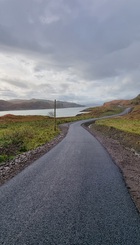
In 2021 and 2022, IKDT secured funding to construst 1.79KM of brand new road connecting the North and South of the island. This project has been in the pipeline for many decades and has connected up the two different communities and is allowing our island to thrive as one. Just after we have secured the funding for the 2nd stage of the project, the tar topping, war broke out in Ukraine. Apart from the obvious humanitarian crisis, this had an instant impact on the price of all the raw materials required for surfacing. It meant we had to scale stage 2 back and make do with tarring the new built section of the road with a single layer of tar and leave approx 500 metres of road in an unbound, farm track state. Our plan for stage 2 had been to deliver 2 layers of tar over the new road (1.79km) and the 500m of existing road when we could petition the council to adopt the road as it connects up the existing council road to several council tax paying households. As it stands, while the road is in use and is hugely beneficial to life on the island however the maintenance burden on IKDT is not ideal. The council will not consider adoption until the road is brought up to the standard we had planned for stage 2 so we are hoping to complete the job. Adoption is key to the long term future of the road and indeed to whole community as it will allow unfettered access to all including vital services, emergency vehicles and access to the lifeline ferry service. The surfacing could be delivered in one week but the effects would be felt for generations to come. We would hope to continue the excellent working relationship with A&B Roads department to help deliver the best value for money possible.
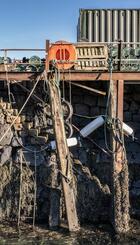
Save Tobermory Fisherman’s Pier
2025-06-02 • No comments • • Regeneration Capital Grant Fund
1 What do we want to do?
Tobermory Fisherman's Pier Association intends to renovate and improve Thomas Telford's hisoric pier for the use of fishermen and other commercial users. We would like to preserve the pier as a place that can be used and enjoyed by locals and visitors alike. We want to open the pier to other commercial users and provide a solution to the risk of flooding caused by increasingly higher tides. A structural engineers report has been commissioned and has provided a plan for remedial works.
2 Why is the project needed?
While the pier is a vital economic resource for the fishermen of North Mull, it is also an essential and integral part of Tobermory's built heritage. Without the pier the fishermen would need to look for alternative space to store and repair gear. They would have to use moorings or pontoons and they would have to use alternative means to land their catch. All of these alternatives are costly, inconvenient and not as safe as the platform provided by the pier.
We have the support of the community and are backed by Mull Community Council, Tobermory Harbour Association and Mull and Iona Community Trust.
3 What positive changes will our project bring about?
The proposed improvements to the pier will provide a fit for purpose structure that will enable the fishing community, and other commercial users, to have confidence in the long-term viability of their businesses and provide the oppurtunity to support new entrants to the sector. Securing the long-term future of the pier will enable it to remain at the heart of the community for centuries to come, bringing economic benefit to the town as a platform for the fishermen and also as part of what draws visitors to Tobermory. It will continue to be a much loved hub for community celebrations and a valued civic space for locals and visitors to enjoy.
4 How long will our project run for?
The project will start in March 2026 and run for seven months.
Please refer to the attached PDF file for our more comprehensive proposal.
From Small Seeds - Cornabus Community Forest Initiative
2025-05-08 • No comments • • Regeneration Capital Grant Fund
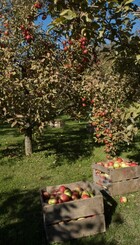
IDI has set aside an initial 25 acres of Cornabus Community Forest to deliver housing, a Community Orchard, Garden and allotments for the community.
In 2021 we carried out extensive consultation on the proposed development site within the now community owned Cornabus Forest. Formerly a commercial Sitka Spruce plantation, the whole site will eventually be replanted with native broadleaf to replicate the Atlantic Rainforest once prevalent on Islay, delivering significant biodiversity benefits but also on the community wish list from the consultation was housing for young people, allotments, an orchard and forest trails and a garden areas.
The project will endeavour to add social and environmental value to the site and also create a space for community members and groups to enjoy. In 2020 Islay lost it's well-known community garden at Islay House, due to the property being sold on the open market. This was a much loved and used community space. Although the site at Cornabus is not a walled garden, extensive research on other forest garden initiatives was carried out in 2022 - including visits to Royal Botanical Society managed forests and formal garden spaces, such as Benmore and Puck's Glen. The intention is to take some elements of the old community garden site and duplicate them and the new, with lots of additional features.
The project is highly ambitious, and the first stage of funding has been secured from Inspiring Scotland for development of the tree nursery site where we will grow the replacement trees. Secondary funding has come from Carbon Neutral Islands, specifically to create some of the infrastructure and assist with a circular economy approach to fuel wood supply on the island at affordable rates.
This is a lifetime legacy project that will create a destination for outdoor enjoyment but also offer a range of solutions to the socio-economic challenges that the island faces with a strong focus on becoming Carbon Neutral. Islay is in a housing crisis and the addition of 10 affordable houses will help address some of those issues. To ease pressure on the Grid, the project also comes with it’s own district heating system using the remaining Sitka Spruce on site as a fuel source, a wind turbine and solar panels.
The finished project will deliver a host of positive benefits including but not limited to:
- Employment
- Affordable Housing
- Circular Economy approach/local fuel
- Community garden
- Allotments
- Carbon capture in new tree planting
- Significant destination space for locals and visitors alike.
The project will link into Argyll College, Islay High School, Youth Initiative and employability. Partners and funders will be Scottish Government – Rural and Islands Housing Fund, Argyll and Bute Council and National Lottery. Community group usage will be open to all groups on the island and will link into national networks such as Community Woodlands Association, Scottish Islands Federation and Community Tree Nursery Network.
Sandbank Village Hall (SVH) – The Next 100 Years!
2025-06-02 • No comments • • Regeneration Capital Grant Fund
- What do you want to do? Describe the activities your project will carry out and list any partner organisations.
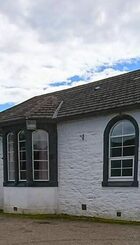
- SVH Management Committee is seeking funding to redevelop the village hall in a rural community where there are no other community facilities. The hall hosts a range of groups and services, such as yoga classes, family celebrations, presentations e.g. local wind farm, fundraising events and acts as a polling station during local and national elections.
- Why is your project needed? Summarise the evidence showing your community needs this project. Help!
Today, SVH remains a vital institution within the village, embodying a rich heritage and an unwavering commitment to community values. It stands as a reminder of the village's history, a venue for collective memory, and a beacon of fellowship. The hall continues to host a diverse range of activities, adapting to contemporary needs while preserving its historical essence.
- What positive changes will your project bring about? Describe the benefits for participants. Help!
The SVH project will help deliver community needs which evidence: -
- Clear and genuine need.
- Relevant and appropriate consultation.
- The ability to keep the site in good order and well maintained once the project is complete.
- Reasonable costs which offer good value.
- The ability to deliver the project on time and on budget.
- The project’s outcomes will benefit the natural, social or built environment and make a positive impact on local communities.
- How long will your project run for? Provide the project duration and estimated start date.
From 1st April 2025 to 31 March 2026
Tighnabruaich Community Petrol Station - powering a fragile community
2025-05-31 • No comments • • Regeneration Capital Grant Fund
The Problem
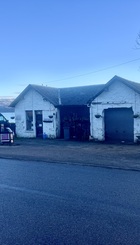
Our petrol station is threatened with closure due to retirement of the owners, and the business case for a commercial purchase is very weak. We are likely to end up with no fuel within 24 miles (and more for the isolated parts of our district). If people are forced to travel out of the area for fuel, they will tend to do all their shopping on the same trip, affecting other local shops and businesses . Carbon emissions will increase as people are forced to travel at least 48 miles round trip for fuel, over single-track mountain roads. Even running garden tools will become problematic, and our local Life Boat and volunteer Fire Service will have problems with adequate supply.
The Solution
This type of scenario is a perfect fit for a community enterprise response: improving the resilience and sustainability of the local area; providing opportunities for business and employment; and helping our community plan ahead for the switch to electric vehicles. We need a community-owned petrol station to secure fuel supplies in the area in the medium-term, install charging points, create business units for rent, and refurbish the historic building as a community transport and resilience hub. Having run two community consultations in the past two years we know that people will continue to need fuel for the next 10 - 15 years, that there is demand for workshop spaces for small businesses and that the petrol station building (a former Victorian pier house) has a high heritage value for the local community.
Opportunities
Since consulting on the community purchase of the petrol station, we have a had two direct approaches from potential workshop tenants. One local community group has a waiting list of small businesses looking for premises, so the creation of new work units would have a positive impact on the local economy. With joint support from the Scottish Land Fund we would be able to employ a Project and Transition Manager, tasked with delivering improvements to the building, installation of charging points and other renewables measures, managing the workshop spaces and developing our plans for electric community transport. We see many benefits arising from this project as well as securing a vital service.
Current Stage of Planning
We are about to apply to the Scottish Land Fund for support in meeting the purchase price and employing a part-time member of staff. Other funds will come from applications to charitable trusts and the Scottish Government, a community share issue and our own resources. We have a clear idea of the costs of the building refurbishment and the replacment of the fuel pumps with card payment models. Support to install charging points will be our other target for the early stages after our community purchase and there are several possible sources of funding.
Longer Term Goals
The move away from fossil fuels is envrionmentally and socially necessary. Climate change is driving a rise in the number of destructive weather events - Storm Eowyn resulted in a five-day power cut for the district. Our scattered population has a very high percentage of older people and the lack of power and communication was very concerning for them. In bringing the petrol station to community ownership we are not blind to the impact of carbon emissions and their effect on community resilience and environmental sustainability.
Although it may seem paradoxical, our purchase of the petrol station will help in lowering carbon emissions by removing the need for unnecessary journeys of around 50 miles. It will protect local services by keeping a point of sale in the area. It will make the district more secure in providing a storage space for emergency resilience supplies (like camping stoves and satellite phones to be used in future storms). It will allow us to install charging points and solar panels. It will bring a restoration of the adjoining pier into consideration as a tourist and leisure resource for swimming and boating. It will give us a site to base the community transport project that was viewed so favourably in our 2023 community survey. All of these achievable goals mean that the community buy-out will be benefiting the area long after the need to sell fossil fuels is gone.
Tiree & Coll Community Vet Practice Project
2025-05-30 • No comments • • Regeneration Capital Grant Fund
What do we want to do?
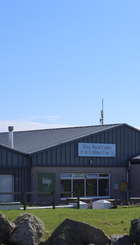
This project seeks to transform an existing community space at the Tiree Rural Centre – previously used as a café – into a community-owned vet practice serving the islands of Coll and Tiree. The Rural Centre hosts the island’s cattle and sheep market along with an exhibition showing all aspects of crofting and wildlife on Tiree. It plays a leading role in preserving Tiree’s rich crofting heritage and, together with its central location on the island, is well-placed to host a community vet practice. This represents a significant investment and regeneration project for both Tiree and Coll, and would contribute positively to local economies, which revolve around crofting.
This project is led by a consortium of island stakeholders which includes Tiree Rural Development (which manage the Rural Centre), Tiree Community Development Trust, various crofters and community representatives, and the current vet. This steering group provides strategic oversight and represents a community-led approach focused on safeguarding a key island service and a shared belief that something must be done before it is too late.
To that end, the Tiree Community Development Trust commissioned a feasibility study to investigate renovating the available, currently vacant space at the Rural Centre into a vet practice. With a full design and accurate costs now in place, the consortium are now in a position to commence a build phase of the project, and are actively seeking funding to make this important project a reality.
Why is our project needed?
A vet is absolutely critical to both Tiree and Coll. Without an island vet, crofting largely becomes untenable, as crofters need access to veterinary services to keep animals and ensure their welfare. Crucially, Tiree’s culture, history, economy, and its unique machair landscape are all strongly linked to crofting. In addition to running their crofts, crofters often hold multiple jobs and community roles, and are essential to island life.
As crofting is the island’s primary industry, the loss of a vet would have dire consequences for the local economy. This would likely lead to emigration and a decline in the numbers of families living on the island. Even a few families leaving would have a significant impact on services, and could spark the further closure of lifeline services such as the school, GP surgery, and local businesses – a gradual process often seen in other small Scottish islands once the population falls below a critical point. Once these key services are lost, we know from experience and research that they rarely return. This is due to the high cost of running services on islands, the challenges of setting up, and the dwindling economic returns and economies of scale. Remote islands are places where market failure is the norm, not the exception. The group recognises that the vet practice is one such service that the island cannot afford to lose.
Moreover, many residents keep small animals and pets; the operational and cost implications of relying on a mainland vet service for Tiree and Coll residents are significant, in some instances prohibitive. The vet also plays a central role in protecting the island’s unique wildlife and marine life, regularly attending call-outs to help stranded dolphins and seals, for example.
With our current vet looking to retire in the near future, we are keen to minimise barriers that an incoming vet faces. In the past, it has been difficult to recruit and retain vet capacity, and recent shortages in the sector, combined with a low financial return of investing in an island-based vet practice, have made this challenge more acute. Additionally, the current vet operates out of a small and temporary space which is unlikely to meet future RCVS standards and does not fully meet the dynamic needs of an island vet. A high-quality, affordable, and long-term practice ensures that the prospect of moving to Tiree to take over the practice becomes much more attractive and financially viable.
What positive changes will our project bring about?
This project provides key benefits to crofters and the wider community on both Tiree and Coll:
- A bespoke, compliant, and modern vet practice will make it easier to attract an incoming vet to the island, and retain them once they have arrived.
- It improves the standard of care and contributes positively to animal welfare, as well as providing a better space for a vet to operate out of.
- Securing an appropriate practice space for Tiree and Coll safeguards the entire crofting sector, the island’s primary industry.
- Security of tenure for the vet, as well as a stable rental income for a community group dedicated to improving conditions for crofters and wildlife on Tiree.
- Making better use of existing assets, and optimising design to factor in environmental improvements.
- Tiree and Coll pet owners are guaranteed access to veterinary care without having to rely on mainland services, which can be difficult and expensive to access – especially during emergencies.
- The project contributes to the wider regeneration of Tiree’s existing community-owned assets, and will play a key role in Tiree Rural Centre’s future.
- A lifeline island service is maintained, contributing to the overall viability of Tiree’s small, unique, and thriving community.
How long will our project run for?
The project will start on: 01/03/2026
The project will run for : 12 months
Sonas Childcare Project
2025-05-26 • No comments • • Regeneration Capital Grant Fund
SID plans to build a dedicated childcare facility to cater for babies and toddlers up to three years old and provide dedicated childcare services for the community. This building will complement the soon to be finished new community Pavilion, and will be set within the 16 acres of Playing Fields, with access to a nearby enclosed playpark, and plenty of green space.
On Islay there are a very limited number of childminders available. Islay has had a steady number of babies born in the last three years (ranging from 20-22 babies/year) and this is predicted to rise. Due to the lack of services available, families are using relatives and friends as childminders to allow them to return to work. The provision of a dedicated childcare facility would provide flexibility with this.
The facility will bring the following positive changes:
- More flexibility for families with regards to 0 to 3 childcare options.
- More opportunities for families to work childcare around their needs, enabling parents to return to work.
- Families may be encouraged to move to Islay, as instead of having severely limited childcare options there will be a dedicated facility.
- It will provide options for employment and training within the facility. It may help provide an opportunity for students and school leavers to gain work experience in their chosen field, without having to leave Islay.
It is anticipated that it will be several years before the facility is up and running. The project is currently in the early stages. A Planning Application has been submitted to Argyll & Bute Council, and the Building Warrant has been completed as far as possible, given the current funding restrictions. SID are currently looking for funding to finalise the Building Warrant, and move on to the construction phases.