
View mode
- Cards
- List
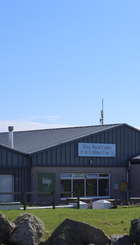
Tiree & Coll Community Vet Practice Project
2025-05-30 • No comments • • Regeneration Capital Grant Fund
What do we want to do?
This project seeks to transform an existing community space at the Tiree Rural Centre – previously used as a café – into a community-owned vet practice serving the islands of Coll and Tiree. The Rural Centre hosts the island’s cattle and sheep market along with an exhibition showing all aspects of crofting and wildlife on Tiree. It plays a leading role in preserving Tiree’s rich crofting heritage and, together with its central location on the island, is well-placed to host a community vet practice. This represents a significant investment and regeneration project for both Tiree and Coll, and would contribute positively to local economies, which revolve around crofting.
This project is led by a consortium of island stakeholders which includes Tiree Rural Development (which manage the Rural Centre), Tiree Community Development Trust, various crofters and community representatives, and the current vet. This steering group provides strategic oversight and represents a community-led approach focused on safeguarding a key island service and a shared belief that something must be done before it is too late.
To that end, the Tiree Community Development Trust commissioned a feasibility study to investigate renovating the available, currently vacant space at the Rural Centre into a vet practice. With a full design and accurate costs now in place, the consortium are now in a position to commence a build phase of the project, and are actively seeking funding to make this important project a reality.
Why is our project needed?
A vet is absolutely critical to both Tiree and Coll. Without an island vet, crofting largely becomes untenable, as crofters need access to veterinary services to keep animals and ensure their welfare. Crucially, Tiree’s culture, history, economy, and its unique machair landscape are all strongly linked to crofting. In addition to running their crofts, crofters often hold multiple jobs and community roles, and are essential to island life.
As crofting is the island’s primary industry, the loss of a vet would have dire consequences for the local economy. This would likely lead to emigration and a decline in the numbers of families living on the island. Even a few families leaving would have a significant impact on services, and could spark the further closure of lifeline services such as the school, GP surgery, and local businesses – a gradual process often seen in other small Scottish islands once the population falls below a critical point. Once these key services are lost, we know from experience and research that they rarely return. This is due to the high cost of running services on islands, the challenges of setting up, and the dwindling economic returns and economies of scale. Remote islands are places where market failure is the norm, not the exception. The group recognises that the vet practice is one such service that the island cannot afford to lose.
Moreover, many residents keep small animals and pets; the operational and cost implications of relying on a mainland vet service for Tiree and Coll residents are significant, in some instances prohibitive. The vet also plays a central role in protecting the island’s unique wildlife and marine life, regularly attending call-outs to help stranded dolphins and seals, for example.
With our current vet looking to retire in the near future, we are keen to minimise barriers that an incoming vet faces. In the past, it has been difficult to recruit and retain vet capacity, and recent shortages in the sector, combined with a low financial return of investing in an island-based vet practice, have made this challenge more acute. Additionally, the current vet operates out of a small and temporary space which is unlikely to meet future RCVS standards and does not fully meet the dynamic needs of an island vet. A high-quality, affordable, and long-term practice ensures that the prospect of moving to Tiree to take over the practice becomes much more attractive and financially viable.
What positive changes will our project bring about?
This project provides key benefits to crofters and the wider community on both Tiree and Coll:
- A bespoke, compliant, and modern vet practice will make it easier to attract an incoming vet to the island, and retain them once they have arrived.
- It improves the standard of care and contributes positively to animal welfare, as well as providing a better space for a vet to operate out of.
- Securing an appropriate practice space for Tiree and Coll safeguards the entire crofting sector, the island’s primary industry.
- Security of tenure for the vet, as well as a stable rental income for a community group dedicated to improving conditions for crofters and wildlife on Tiree.
- Making better use of existing assets, and optimising design to factor in environmental improvements.
- Tiree and Coll pet owners are guaranteed access to veterinary care without having to rely on mainland services, which can be difficult and expensive to access – especially during emergencies.
- The project contributes to the wider regeneration of Tiree’s existing community-owned assets, and will play a key role in Tiree Rural Centre’s future.
- A lifeline island service is maintained, contributing to the overall viability of Tiree’s small, unique, and thriving community.
How long will our project run for?
The project will start on: 01/03/2026
The project will run for : 12 months
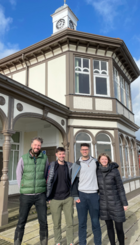
Dunoon Pier
2025-03-26 • No comments • • Regeneration Capital Grant Fund
Operating under the governance of the Dunoon Community Development Trust and in partnership with Argyll and Bute Council, the Save the Pier working group has been actively seeking funding and carrying out further research to progress the necessary technical studies needed to inform these types of developments.
The initial goal of the working group is to develop a robust, evidence-based feasibility study, providing a clear case for the pier’s redevelopment and its potential role within the future of the town’s wider marine infrastructure. Longer-term they hope to begin the process of the pier’s renovation.
The wider team —comprising volunteers with expertise in public sector infrastructure, finance, heritage preservation, project development and community engagement —has been engaging with stakeholders in the public and private sector, having discussions with potential funders, and laying the groundwork to ensure any future redevelopment is viable and sustainable.
Our Progress So Far
The project has involved extensive positive collaboration with Argyll and Bute Council, alongside wider stakeholder consultations, a public petition, and collaboration with advisors in major infrastructure, heritage conservation, and funding options.
Community Involvement
Community engagement will be essential to shaping the pier’s future. There has consistently been a lot of interest on social media and in the newspaper with large numbers of people getting behind the idea of Dunoon Pier being regenerated. It is clear that there is good community support for the idea and the working group welcomes the input of local residents, businesses, and local organisations as the project evolves.
At this stage, the focus is on gathering the necessary technical and financial evidence to determine what is achievable.
Next Steps
Funding is currently being secured to complete a feasibility study, which will provide a comprehensive assessment of the pier’s future potential. This study will form the foundation for securing funding to progress any future redevelopment. However, given the scale of the project, careful planning and a phased approach is required. We aim to complete this initial phase and be in a position to share the feasibility study by Summer 2025.
Looking Ahead
Public infrastructure projects of this scale take time, but the dedication of the team working with the support of the local authority and Dunoon Community Development Trust means that there is a good chance that this project will progress positively. The Dunoon Pier working group is committed to communicating on their progress and will provide regular updates via Dunoon Community Development Trust and partners as the project moves forward.
.jpeg)
Strachur Community Men's Shed
2025-05-22 • No comments • • Regeneration Capital Grant Fund
Our primary aim is to build a safe social/recreational workshop and creative workspace for retired men & women to undertake creative projects for the village and local district. This should assist in improving the appearance of Strachur and surrounding area for the benefit of the local community and visitors e.g. by reconstituting picnic areas that have fallen into disrepair, also by maintaining benches; fences etc. such as those in our community Heron Park and installing sculpture/art works where agreed as appropriate. Similar maintenance and creative projects would be made available to the district with the involvement of people domiciled within a 10 mile radius. Existing craft and trade skills that 'Shed' members possess would be used to do this, hopefully enabling members to learn new skills as well. Other local organizations would also benefit e.g. the local Youth/Drama Group where members could assist in the manufacture of costumes and scenery for the regular annual productions at reduced cost.
Like many small rural villages Strachur has an increasing population of retirees. We hope that involvement in local projects - through teamwork - would help in reducing feelings of isolation for the 'older' members of our community by providing mental and physical stimulation, thus showing the 'younger' members of our community that we still have something to contribute to village life whilst improving recreational facilities for all. This approach should enable the facility to be sustained for many years as people become aware of the projects we are involved in. The provision of workshop facilities should also benefit the village Memorial Hall by providing support for maintenance and supplementing the facilities available in the centre of the village. To this end we want to work with the local Development Corporation; the Village Hall Committee and the Organisations that use the limited facilities available at present.
An Tobar and Mull Theatre: Theatre Development and Early Years Facility
2025-05-23 • No comments • • Regeneration Capital Grant Fund
Who are we?
An Tobar and Mull Theatre (AT&MT) is a vibrant multi-arts centre on the Isle of Mull and the only producing theatre in the Hebrides. As a hub for artistic excellence, cultural expression, and community connection, we play a vital role in our island's creative and social ecology. We aspire to be an island voice holding space for island experience in global culture at a time when the voices of rural communities are drowned out. Through our wide-ranging programme of theatre, visual arts, creative learning, and music, we serve:
- Local and visiting artists, providing space, time, and collaborative opportunities to experiment and grow.
- All school-age children on Mull, providing arts engagement and curriculum enrichment.
- Young people, creating pathways in the creative industries and amplifying youth voice through the arts.
- Older adults, including those living with dementia and other long-term conditions, supporting wellbeing and inclusion.
AT&MT has been recognised as a leader in community-based arts practice by the Federation of Scottish Theatre and as an essential part of local infrastructure by the Mull and Iona Community Trust. The value of our community outreach, arts provision, and advocacy for rural communities is reflected in the thoughtful feedback we continue to receive from our local community:
“Engaging directly with one’s local community and peers is a valuable experience as it provides opportunity to share ideas and experiences and reinforces connectivity across our islands. I feel that this type of outreach work [AT&MT’s community outreach programme] is fundamental to a thriving cultural ecology on Mull and Iona” – Studio Cèilidh participant
“Because of Mull’s geography and lack of public transport many youngsters have difficulty accessing creative activities [...] The work has been taken to them through schools and location theatre. This ensures equality of access.” – Long-term Community Members
What do we want to do and why?
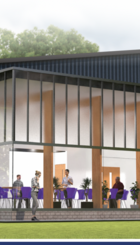
To secure our future and deepen our impact, we are launching an ambitious development project that responds directly to the needs of our island community. At the heart of this project is the purchase of the land beneath Mull Theatre and extension of the building to include dedicated creative workshop spaces for artists and visiting practitioners and an on-site crèche and early years facility to support families and broaden access to the arts.
This project is essential to:
- Protect the future of Mull's only professional theatre and the only producing theatre in the Hebrides. Currently operating under a lease, securing ownership of our site will give us long-term stability and the confidence to plan boldly.
- Address a critical shortage in early years childcare. Mull faces a well-documented lack of affordable and accessible childcare. This project offers a creative, community-centred solution that support parents and caregivers to participate fully in island life and the creative sector.
- Nurture the next generation of artists and islanders. The crèche and workshop spaces will be designed with care, learning, discovery, and cultural enrichment at their heart.
- Grow the island's creative ecology and promote the artistic excellence of Argyll and Bute on a national and international level. New workshop spaces will allow us to host more artists-in-residence and facilitate peer exchange. It will also offer affordable rehearsal and creation space for local and visiting artists, and extend our ability to deliver training, workshops, and events that connect Mull and Argyll and Bute to the wider cultural landscape of Scotland and beyond.
- Strengthen community wellbeing. As we emerge from the social and economic challenges of recent years, this development supports community recovery through creativity, care, and collaboration.
Who are our partners?
We will work in partnership with:
- Local early years creative learning practitioners and educators, ensuring the crèche is child-centred, safe, and rooted in best practice.
- Forestry and Land Scotland, to navigate our land purchase and ensure the building extension is designed with care and attention to our beautiful natural surroundings.
- Mull and Iona Community Trust (MICT), to ensure the facility is bespoke and meets the needs of our island community.
- Our Community Advisory Group, to ensure that local voices and lived experience remains at the heart of the project.
We believe that access to the arts, like access to care, should not depend on geography. This project is about more than bricks and mortar, it's about building a future where creativity, care, and community thrive side-by-side. With the support of our partners and funders, we're excited to take this next step in our journey, ensuring that AT&MT remains a place where island voices are heard, nurtured, and celebrated for generations to come.
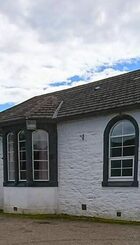
Sandbank Village Hall (SVH) – The Next 100 Years!
2025-06-02 • No comments • • Regeneration Capital Grant Fund
- What do you want to do? Describe the activities your project will carry out and list any partner organisations.
- SVH Management Committee is seeking funding to redevelop the village hall in a rural community where there are no other community facilities. The hall hosts a range of groups and services, such as yoga classes, family celebrations, presentations e.g. local wind farm, fundraising events and acts as a polling station during local and national elections.
- Why is your project needed? Summarise the evidence showing your community needs this project. Help!
Today, SVH remains a vital institution within the village, embodying a rich heritage and an unwavering commitment to community values. It stands as a reminder of the village's history, a venue for collective memory, and a beacon of fellowship. The hall continues to host a diverse range of activities, adapting to contemporary needs while preserving its historical essence.
- What positive changes will your project bring about? Describe the benefits for participants. Help!
The SVH project will help deliver community needs which evidence: -
- Clear and genuine need.
- Relevant and appropriate consultation.
- The ability to keep the site in good order and well maintained once the project is complete.
- Reasonable costs which offer good value.
- The ability to deliver the project on time and on budget.
- The project’s outcomes will benefit the natural, social or built environment and make a positive impact on local communities.
- How long will your project run for? Provide the project duration and estimated start date.
From 1st April 2025 to 31 March 2026
Creating a Community Growing Space in Oban Town Centre
2025-06-02 • No comments • • Regeneration Capital Grant Fund
This project meets RCGF criteria: address vacant / derelict land as well as supporting locally developed, place-based regeneration projects that involve local communities, helping to tackle inequalities and improving the economic, social and physical environment of deprived, disadvantaged and fragile remote communities across Scotland. It is community led, and will result in strong regeneration outcomes.
The Rockfield Garden is leased and run by Oban Communities Trust, a Community Benefit Society run by and for its members and the wider community.
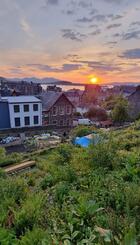
We are transforming a disused, previously cultivated food production area into a vibrant and inclusive community growing space, but need funding to realise our vision. This project is rooted in a growing community movement: over the past year, more than 1,100 volunteer hours have been contributed at The Rockfield Garden. The momentum is clear—and this garden will be a living, growing symbol of community action.
The space, located behind The Rockfield Centre, was previously used to grow fruit, vegetables, and flowers for the former McTavish's Kitchens, but has since lain derelict.
What will your project do? Over the last 12 months a 25+ band of volunteers have spend over 1000 hours on Phase 1, preparing the space for cultivation. We are now seeking funding for Phase 2, which will initiate food production and support both experienced and novice growers, fostering strong community involvement.
- Installing fencing and handrails to ensure safety and accessibility
- Building raised beds and flexible growing spaces for communal and individual use
- Constructing a weatherproof meeting shelter and a secure tool shed.
- Providing tools, gardening equipment, seeds, compost, and plants.
- Developing a community composting system to promote circular growing practices.
- Installing bee hives, chicken coops, and a community orchard
- Offering a varied programme of community engagement and educational growing activities, including informal social gardening drop-ins, volunteer action days, and community education.
Why is your project needed? Oban currently has no community growing provision, and local residents lack accessible opportunities to grow, learn, and contribute. As a rural town we are also heavily reliant on imported food, reducing local food resilience and creating disproportionately high food mile loadings. This project will:
- Provide the community with growing space, tools, and support to grow food locally.
- Encourage healthier lifestyles and increased social connection through shared, hands-on activity
- Respond to the pressing need for increased food resilience in the face of climate change and supply chain vulnerabilities.
- Help diversify the town’s food sources, reducing reliance on imported produce and associated transport emissions.
- Create a learning hub to build knowledge and practical skills in sustainable food growing, composting, and ecological gardening
- Offer a mix of communal and some individually managed plots, providing flexibility to suit different needs and abilities.
- Enhance community cohesion and empowerment through participation, ownership, and shared outcomes.
- Contribute to the Rockfield Centre's mission to reduce its carbon footprint and provide wholesome, healthy, affordable community meals.
What positive changes will your project bring about? The Rockfield Garden will deliver wide-ranging benefits across environmental, social, and educational areas:
- Environmental Impact: With an estimated growing area of 1,400m², there is potential to produce 2,000–3,000kg of fruit and vegetables annually. This local production could reduce food miles and cut an estimated 3–4 tonnes of CO₂ emissions per year.
- Food Resilience: In light of climate change and global food supply threats, local food production is a vital adaptation strategy. Growing food locally in Oban will contribute to community-level food security and resilience.
- Health and Wellbeing: Access to growing spaces and outdoor activities supports mental and physical wellbeing. Gardening fosters regular physical activity, better nutrition, and emotional connection to nature.
- Learning and Empowerment: Hands-on education will equip participants with valuable skills in food production, sustainability, and ecological stewardship.
- Community Cohesion: The project will bring together people of all ages and backgrounds, strengthening social bonds, reducing isolation, and building a sense of place and purpose.
- Sustainability: By incorporating composting and circular practices, such as seed saving, the garden will serve as a practical example of sustainable community living. By transforming this underused land into a thriving garden, we’re not just growing food—we’re growing community, resilience, and shared futures.
How long will your project run for? This is a long-term project that is ticking along in Phase 1, but requires substantial funding to move to Phase 2. Once funded, we anticipate c. 1 year to do the required structural works. We anticipate the total works requiring c. 70k, including staff time, but would gladly accept smaller amounts of funding which would allow us to complete the project in a modular fashion.
Creating a Cairnbaan Community Hub. Refurbishment of the old forestry buildings
2025-05-30 • No comments • • Regeneration Capital Grant Fund
1. What we want to achieve.
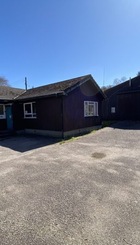
The Cairnbaan Community Trust, (SC052905) wants to refurbish the forestry buildings to provide a community gathering point and flexible workshop and event spaces. We want a community hub that can be used by the community for education such as crafts and Gaelic, health e.g. yoga and other activities, recreation and social gatherings, inside and outside and temporary office space for local entrepreneurs.
Our priority is the smaller of the two buildings which will provide space for community events and workshops, social meeting space, hot desks and a community kitchen. There is external space that can be developed to provide a community garden and outside event space. It is hoped in the future the larger of the two buildings can be developed to provide space for larger workshops and events.
We have divided the work into phases and we are currently seeking funding for phases 1 and 2.
Phase 0: This covers the procurement of the forestry buildings under a community asset transfer funded by the Scottish Land Fund and we have secured initial funding for essential repairs to both buildings to make them safe and weatherproof. The work will start when we take ownership on the 01/08/2025.
Phase 1: Is the refurbishment of the smaller building. This phase will change the internal layout of the building to create flexible spaces. This entails new partitions, doors, lighting and upgrade to the heating. Additional facilities, external and internal, will be needed for disabled and users with special needs. We also aim to fit a community kitchen and social space for coffee mornings. Finally we need to replace windows and install new furnishings and fittings.
Phase 2: Is the landscaping and provision of a community garden and outdoor space.
Phase 3: Is the refurbishment and fitting out of the larger building. In this phase we also plan to look at energy efficiency improvements, e.g. heat pumps and solar panels.
2. Why our project is needed
Currently there is no community centre to provide a focal point or resources for the community. There is a risk of social isolation amongst our older population and there are no facilities for the young people in our village. Community cohesion is being eroded.
We commissioned a feasibility report through Community Enterprise which highlighted the following points. Accessing facilities is difficult without a car, the minimal bus service is a school service with no evening or Sunday services. There are no shops, medical or other services in the village. Despite scoring highly in other domains the area falls into the 10% most deprived areas in Scotland in terms of access to services in relation to the Scottish indices of multiple deprivation. Feedback from local people highlighted that a primary need in the community is an indoor social area and meeting space.
3. The positive changes our project will bring
Our vision is to reduce isolation, improve community life and reflect the cultural, environment and historic heritage of the area. The current priorities for the CCT are.
- Bringing the community together to enable opportunities for social interaction and growth.
- Advancement of arts, heritage, culture and science.
- The provision and organization of recreational facilities to improve the quality of life for the community.
- Improving the environment including education about the environment, culture and history.
- The relief of thos in need either because of age, ill health, disability or financial hardship.
The refurbishment of the buidings will provide a focal point for the community and the resources to bring the community together especially those that feel isolated. It will provide resources for all ages across the community and give everyone opportunities for development and a sense of purpose and indentity.
Through current engagement with the local community we have already identified skills and volunteers that can contribute to the refurbishment which will foster community involvement from the outset
4. How long will our project run
Phase 1 and 2 of the project will start on: 05/01/2026
The project will run for: 15 months
Our Business plan and the Feasibility report are available on request. Unfortunately the file size was too big to attach.
Portsonachan Hall Rennovation & Modernisation Project
2025-05-30 • No comments • • Regeneration Capital Grant Fund
We want to modernise and improve our village hall which has remained unchanged for almost 100 years so that it can remain at the heart of our unique loch-side community for another century.
We are a close-knit community, but geographically remote, stretching 18 linear miles down Loch Awe-side. Ensuring we have a Village Hall that is fit for purpose is essential to keep us together, especially through the long autumn and winter months. The Hall provides us with a way of keeping in touch, offering people company and activities when there are so few amenities within the proximity of our community. Our Hall is home to about 13 different community groups, each with approximately 10-20 members. The Hall also provides an important resource for meetings for the South Lochaweside Community Company and the Glenorchy and Innishail Community Council as two examples. Having this space is vital for ensuring we can maintain such activities which allow our community a voice within the democratic process. We also hold many social evenings, which bring together new members of the community looking to integrate as well as many of the established community who would not get to see each other without the Hall. Our most recent BBQ brought in 90 people and our Sunday lunch catered for 30 people, and many of whom said without having this event, they would have spent their weekend alone.
The closure of the local bar recently has left a void in the community with the hall now the only communal space where members of the community can come together.
Having a space that is safe, warm and usable is a lifeline for rural communities like ours, and has wide-reaching impacts, including on our community's health and wellbeing. Given the age of our existing hall we need to refurbish our Hall to ensure it can continue to serve our community and for it to become more environmentally-considerate.
Full planning permission was granted for the rennovation project in May 2025. We can now begin work on the creation of our project management plan which is likely to be divided into distinct phases.
We anticipate that this project will take a year to a year and half to complete, during which time we will partner with Glenorchy & Innishail Community Council, South Loch Awe Community Company, Dalmally Community Company and Orchy & Awe Community Trust.
Clachan Village Hall/Community Hub Phoenix project
2025-06-02 • No comments • • Regeneration Capital Grant Fund
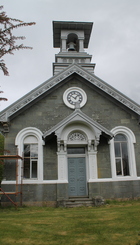
Clachan lost its much loved and well used village hall due to terminal decline as an asbestos concrete roofed building with corroded portal flames and was demolished in 2022. The iconic historic B Lited Kilcalmonell church was purchased with a Scottish Land Fund grant to serve as a replacement village hall to arise like the proverbial phoenix from the ashes of the old hall. The hub will allow resumption of the dormant user group activities and will provide a recreational, educational venue for the comunity as well as a resource for private hire. It will also serve as an emergency centre to provide safe haven and meal provision at times of emergency such as has occured on many occasions over the past 10 years particualrly in relation to power cuts, village floods, a freak snow storm, and gales, some of which also resulted in blocking the A83 artery to Campbeltown. We are in the process of renovating the exisitng church building to provide the main comunal space and this work shold be completed by the end of the year. This is being funded in part by are own fund raising initiatives and by local wind farm trust grants. We then need grant funding for the extension to provides the addtional space for : a catering/kitchen area, a small meeting room, additional storage and toilet provision with disabled access for larger capacity events and activities. It is is this extension project (phase 2) that we are seeking funding from the RCGF scheme as well as other agencies such as the Windfarm Trusts, and other grant funders. We are looking for this construction work to be done 2026-2027.
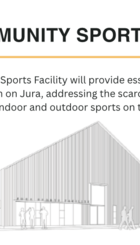
Jura Community Sports Facility - Project Aspiration
2025-04-10 • No comments • • Regeneration Capital Grant Fund
The new sports facility will be suitable for all weather conditions and will enable the playing of various sports on the same surface, including five-a-side football, netball, basketball, and shinty practice.
The Jura Community Development Plan, produced by the Jura Development Trust, highlights the necessity for improved youth and recreational facilities on the Island and concludes that further investigation is required regarding the preferred nature of these facilities.
Developing community-owned and managed assets is strongly supported by national and local policy.