
View mode
- Cards
- List
From Small Seeds - Cornabus Community Forest Initiative
2025-05-08 • No comments • • Regeneration Capital Grant Fund
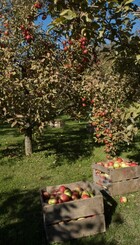
IDI has set aside an initial 25 acres of Cornabus Community Forest to deliver housing, a Community Orchard, Garden and allotments for the community.
In 2021 we carried out extensive consultation on the proposed development site within the now community owned Cornabus Forest. Formerly a commercial Sitka Spruce plantation, the whole site will eventually be replanted with native broadleaf to replicate the Atlantic Rainforest once prevalent on Islay, delivering significant biodiversity benefits but also on the community wish list from the consultation was housing for young people, allotments, an orchard and forest trails and a garden areas.
The project will endeavour to add social and environmental value to the site and also create a space for community members and groups to enjoy. In 2020 Islay lost it's well-known community garden at Islay House, due to the property being sold on the open market. This was a much loved and used community space. Although the site at Cornabus is not a walled garden, extensive research on other forest garden initiatives was carried out in 2022 - including visits to Royal Botanical Society managed forests and formal garden spaces, such as Benmore and Puck's Glen. The intention is to take some elements of the old community garden site and duplicate them and the new, with lots of additional features.
The project is highly ambitious, and the first stage of funding has been secured from Inspiring Scotland for development of the tree nursery site where we will grow the replacement trees. Secondary funding has come from Carbon Neutral Islands, specifically to create some of the infrastructure and assist with a circular economy approach to fuel wood supply on the island at affordable rates.
This is a lifetime legacy project that will create a destination for outdoor enjoyment but also offer a range of solutions to the socio-economic challenges that the island faces with a strong focus on becoming Carbon Neutral. Islay is in a housing crisis and the addition of 10 affordable houses will help address some of those issues. To ease pressure on the Grid, the project also comes with it’s own district heating system using the remaining Sitka Spruce on site as a fuel source, a wind turbine and solar panels.
The finished project will deliver a host of positive benefits including but not limited to:
- Employment
- Affordable Housing
- Circular Economy approach/local fuel
- Community garden
- Allotments
- Carbon capture in new tree planting
- Significant destination space for locals and visitors alike.
The project will link into Argyll College, Islay High School, Youth Initiative and employability. Partners and funders will be Scottish Government – Rural and Islands Housing Fund, Argyll and Bute Council and National Lottery. Community group usage will be open to all groups on the island and will link into national networks such as Community Woodlands Association, Scottish Islands Federation and Community Tree Nursery Network.
Jura Community Sports Facility - Project Aspiration
2025-04-10 • No comments • • Regeneration Capital Grant Fund
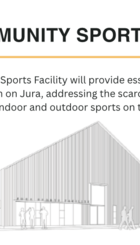
The new sports facility will be suitable for all weather conditions and will enable the playing of various sports on the same surface, including five-a-side football, netball, basketball, and shinty practice.
The Jura Community Development Plan, produced by the Jura Development Trust, highlights the necessity for improved youth and recreational facilities on the Island and concludes that further investigation is required regarding the preferred nature of these facilities.
Developing community-owned and managed assets is strongly supported by national and local policy.
Creating a Cairnbaan Community Hub. Refurbishment of the old forestry buildings
2025-05-30 • No comments • • Regeneration Capital Grant Fund
1. What we want to achieve.
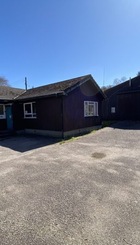
The Cairnbaan Community Trust, (SC052905) wants to refurbish the forestry buildings to provide a community gathering point and flexible workshop and event spaces. We want a community hub that can be used by the community for education such as crafts and Gaelic, health e.g. yoga and other activities, recreation and social gatherings, inside and outside and temporary office space for local entrepreneurs.
Our priority is the smaller of the two buildings which will provide space for community events and workshops, social meeting space, hot desks and a community kitchen. There is external space that can be developed to provide a community garden and outside event space. It is hoped in the future the larger of the two buildings can be developed to provide space for larger workshops and events.
We have divided the work into phases and we are currently seeking funding for phases 1 and 2.
Phase 0: This covers the procurement of the forestry buildings under a community asset transfer funded by the Scottish Land Fund and we have secured initial funding for essential repairs to both buildings to make them safe and weatherproof. The work will start when we take ownership on the 01/08/2025.
Phase 1: Is the refurbishment of the smaller building. This phase will change the internal layout of the building to create flexible spaces. This entails new partitions, doors, lighting and upgrade to the heating. Additional facilities, external and internal, will be needed for disabled and users with special needs. We also aim to fit a community kitchen and social space for coffee mornings. Finally we need to replace windows and install new furnishings and fittings.
Phase 2: Is the landscaping and provision of a community garden and outdoor space.
Phase 3: Is the refurbishment and fitting out of the larger building. In this phase we also plan to look at energy efficiency improvements, e.g. heat pumps and solar panels.
2. Why our project is needed
Currently there is no community centre to provide a focal point or resources for the community. There is a risk of social isolation amongst our older population and there are no facilities for the young people in our village. Community cohesion is being eroded.
We commissioned a feasibility report through Community Enterprise which highlighted the following points. Accessing facilities is difficult without a car, the minimal bus service is a school service with no evening or Sunday services. There are no shops, medical or other services in the village. Despite scoring highly in other domains the area falls into the 10% most deprived areas in Scotland in terms of access to services in relation to the Scottish indices of multiple deprivation. Feedback from local people highlighted that a primary need in the community is an indoor social area and meeting space.
3. The positive changes our project will bring
Our vision is to reduce isolation, improve community life and reflect the cultural, environment and historic heritage of the area. The current priorities for the CCT are.
- Bringing the community together to enable opportunities for social interaction and growth.
- Advancement of arts, heritage, culture and science.
- The provision and organization of recreational facilities to improve the quality of life for the community.
- Improving the environment including education about the environment, culture and history.
- The relief of thos in need either because of age, ill health, disability or financial hardship.
The refurbishment of the buidings will provide a focal point for the community and the resources to bring the community together especially those that feel isolated. It will provide resources for all ages across the community and give everyone opportunities for development and a sense of purpose and indentity.
Through current engagement with the local community we have already identified skills and volunteers that can contribute to the refurbishment which will foster community involvement from the outset
4. How long will our project run
Phase 1 and 2 of the project will start on: 05/01/2026
The project will run for: 15 months
Our Business plan and the Feasibility report are available on request. Unfortunately the file size was too big to attach.
Unlocking Ulva: A Community Barge to Connect, Create and Thrive
2025-06-02 • No comments • • Regeneration Capital Grant Fund
North West Mull Community Woodland Company (NWMCWC) proposes to purchase and operate a community-owned barge to serve the Isle of Ulva. This transformative asset will unlock essential access for people, goods, vehicles, livestock, and materials - enabling regeneration, resilience, and economic growth on a fragile, remote island currently constrained by limited marine transport.
Ulva is a roadless island off the west coast of Mull, with no bridge and only a passenger ferry. The community is entirely reliant on the support of a local fish farm for occasional barge support - help that has been generous and invaluable over the last few years, though is naturally limited. This creates a significant barrier to regeneration, preventing progress on key projects and undermining the island’s long-term sustainability.
The barge will address this infrastructure gap and enable a range of community-led initiatives, including:
-
Heritage restoration, including the movement of scaffolding, stone, and tools to repair historic buildings like Ulva House or Telford-designed church, and other community buildings.
-
Sustainable land management, supporting crofting and farming by transporting livestock, feed, and agricultural supplies, as well as help with the removal of unused and broken equipment and machinery.
-
Resident-led business development, giving islanders the infrastructure needed to start and sustain their own small enterprises - enabling self-sufficiency and reducing dependence on external services.
-
Contractor and service access, allowing building and infrastructure work to proceed without excessive private transport costs.
-
Emergency resilience, offering an alternative logistics route in the event of ferry failure.
-
A community-led initiatives like Ulva Producers’ Market, connecting local growers, makers, and visitors in a shared island space.
-
Cultural and community events, such as pop-up exhibitions, and other events that require transporting bulky or heavy equipment.
As one resident said, "A community barge would secure the long-term future of the farm and ensure we’re no longer totally reliant on a third party to move livestock or machinery. It would also open up opportunities for diversification. On a personal level, it would create a more sustainable and flexible connection between Ulva and Mull—helping our community grow, thrive, and engage more with the wider community of north-west Mull.”
The barge will be community-owned, maintained by NWMCWC, and operated in partnership with residents and local businesses. It will have multiple uses and function flexibly, supporting both everyday needs and long-term community goals. Critically, it provides a foundation for further regeneration efforts, addressing a clear case of market failure and enabling transformational change.
The project will be ready to commence once capital funding is secured, with delivery anticipated over 12–18 months, including procurement, compliance, training, and launch.
Save Tobermory Fisherman’s Pier
2025-06-02 • No comments • • Regeneration Capital Grant Fund
1 What do we want to do?
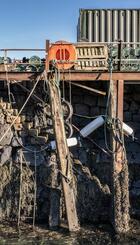
Tobermory Fisherman's Pier Association intends to renovate and improve Thomas Telford's hisoric pier for the use of fishermen and other commercial users. We would like to preserve the pier as a place that can be used and enjoyed by locals and visitors alike. We want to open the pier to other commercial users and provide a solution to the risk of flooding caused by increasingly higher tides. A structural engineers report has been commissioned and has provided a plan for remedial works.
2 Why is the project needed?
While the pier is a vital economic resource for the fishermen of North Mull, it is also an essential and integral part of Tobermory's built heritage. Without the pier the fishermen would need to look for alternative space to store and repair gear. They would have to use moorings or pontoons and they would have to use alternative means to land their catch. All of these alternatives are costly, inconvenient and not as safe as the platform provided by the pier.
We have the support of the community and are backed by Mull Community Council, Tobermory Harbour Association and Mull and Iona Community Trust.
3 What positive changes will our project bring about?
The proposed improvements to the pier will provide a fit for purpose structure that will enable the fishing community, and other commercial users, to have confidence in the long-term viability of their businesses and provide the oppurtunity to support new entrants to the sector. Securing the long-term future of the pier will enable it to remain at the heart of the community for centuries to come, bringing economic benefit to the town as a platform for the fishermen and also as part of what draws visitors to Tobermory. It will continue to be a much loved hub for community celebrations and a valued civic space for locals and visitors to enjoy.
4 How long will our project run for?
The project will start in March 2026 and run for seven months.
Please refer to the attached PDF file for our more comprehensive proposal.
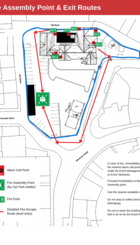.png)
Creating a Safe, Accessible, Multi-Purpose Gathering Space in the Heart of Oban
2025-06-02 • No comments • • Regeneration Capital Grant Fund
This proposal meets RCGF criteria: supporting locally developed, place-based regeneration projects that involve local communities, helping to tackle inequalities and improving the economic, social and physical environment of deprived, disadvantaged and fragile remote communities across Scotland. It is community led, addresses market failure (inadequate parking and outdoor event space) and will result in strong regeneration outcomes.
The Rockfield Centre is owned and run by Oban Communities Trust, a Community Benefit Society run by and for its members and the wider community. It sits within c. 2000 m2 of old playpark, currently used as a car park
What will your project do? The project will re-surface the existing outdoor space surrounding The Rockfield Centre, resulting in a safe, smooth surfaced area which can be used to bring the community together through large-scale outdoor events, create economic additionality by unlocking new potential for town centre events, and contribute to ongoing town-centre carparking demand.
Why is your project needed? In the recent past, The Rockfield Centre's outdoor space has been used for a range of outdoor events from the Clipper food and drink village (July 2024) and the centre's Spring Festival (June 2025), whilst day-to-day it contributes ~ 50 spaces to the town centre parking supply - a critical resource during peak season. However, the space is badly in need of resurfacing, both to ensure its future as a carparking resource and to enable its use as a safe and accessible community gathering space.
What positive changes will your project bring about? We belive that this project will unlock huge potential for outdoor events within Oban town centre, with benefits for business, local charities, and the wider community. Our strategic planning has identified a need within the Oban town centre area for a flexible and adaptable outdoor space that can be used by community groups for a wide range of activities - including markets, concerts, festivals, and outdoor theatre. Our outdoor space is the ideal location for holding these events as it is enclosed, easy to secure, and removes the need for disruptive and costly road closures which would be highly advantageous in a town which regularly experiences traffic flow issues and can struggle with capacity at peak times. We believe that Oban and the wider community will benefit from this project as it will open up opportunities which have otherwise not been considered, as there is no alternative suitable town centre area that can offer these facilities. This project will allow these opportunities to be fully explored and realised. The Rockfield Centre is strategically placed at the heart of the town, and is open to all. We have a track record of successfully delivering exciting, inclusive, and novel community-focussed events alongside large contracted projects, and are fully commited to working collabaratively and building strength through partnerships.
How long will your project run for? Once funding is in place, the works could be completed quickly with actual disruption to the space kept to 2-3 weeks. We estimate the cost to be £60k (based on quotes obtained in summer 2024). We aim to have this work completed by the end of 2025.
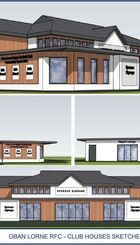
Oban Lorne RFC's Community Sports & Events Hub (Phase 1-2)
2025-05-21 • No comments • • Regeneration Capital Grant Fund
1. What do you want to do?
We aim to develop the Oban Sports & Events Hub—a modern, inclusive facility featuring a multi-sport clubhouse, floodlit pitches, gym, running track, and event spaces. This hub will serve as a central venue for sports, cultural events, and community gatherings, enhancing opportunities for physical activity and social engagement in Oban and the surrounding areas.
2. Why is your project needed?
Oban's existing sports infrastructure is outdated and lacks accessibility, limiting opportunities for participation in sports and community events. The current facilities do not meet the needs of the growing population, particularly youth and individuals with disabilities. By providing modern, accessible facilities, the Oban Sports & Events Hub will address these gaps, promoting inclusivity and community well-being.
3. What positive changes will your project bring about?
The hub will:
-
Enhance Health and Well-being: Provide facilities that encourage physical activity across all age groups.
-
Promote Inclusivity: Ensure accessible design for individuals with disabilities.
-
Support Youth Development: Offer programs and spaces dedicated to youth engagement.
-
Boost Local Economy: Attract events and visitors, supporting local businesses.
-
Foster Community Cohesion: Serve as a gathering place for diverse community groups.
4. How long will your project run for?
The project is planned over multiple phases and is subject to funding and lease agreements. The project has been designed to be flexible but includes:
-
Phase 1 (2025–mid 2026): Construction of the clubhouse, installation of floodlights, and development of the main pitch.
-
Phase 2 (mid–late 2026): Addition of a running track and 4G area.
-
Phase 3–4 (2027): Redevelopment of the bottom pitch and support of potential construction of the skate park.
-
Phases 5–8 (2028–2032): Expansion to include additional facilities and infrastructure improvements.
Partnerships:
We plan to collaborate with:
-
Local Sports Clubs: Oban Lorne RFC, Oban Saints FC, Oban Camanachd, and others.
-
Educational Institutions: Local schools and youth organisations, including the school hostel.
-
Community Groups: Oban Community Skate Park Committee and cultural organisations.
-
Local Businesses & Charities: Atlantis Leisure, Adventure Oban, Happy Wee Health Club.
-
Local Authorities: Argyll and Bute Council for planning and support.
-
National Event Organisers
These partnerships will ensure the hub meets the diverse needs of the community and operates sustainably.
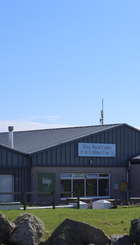
Tiree & Coll Community Vet Practice Project
2025-05-30 • No comments • • Regeneration Capital Grant Fund
What do we want to do?
This project seeks to transform an existing community space at the Tiree Rural Centre – previously used as a café – into a community-owned vet practice serving the islands of Coll and Tiree. The Rural Centre hosts the island’s cattle and sheep market along with an exhibition showing all aspects of crofting and wildlife on Tiree. It plays a leading role in preserving Tiree’s rich crofting heritage and, together with its central location on the island, is well-placed to host a community vet practice. This represents a significant investment and regeneration project for both Tiree and Coll, and would contribute positively to local economies, which revolve around crofting.
This project is led by a consortium of island stakeholders which includes Tiree Rural Development (which manage the Rural Centre), Tiree Community Development Trust, various crofters and community representatives, and the current vet. This steering group provides strategic oversight and represents a community-led approach focused on safeguarding a key island service and a shared belief that something must be done before it is too late.
To that end, the Tiree Community Development Trust commissioned a feasibility study to investigate renovating the available, currently vacant space at the Rural Centre into a vet practice. With a full design and accurate costs now in place, the consortium are now in a position to commence a build phase of the project, and are actively seeking funding to make this important project a reality.
Why is our project needed?
A vet is absolutely critical to both Tiree and Coll. Without an island vet, crofting largely becomes untenable, as crofters need access to veterinary services to keep animals and ensure their welfare. Crucially, Tiree’s culture, history, economy, and its unique machair landscape are all strongly linked to crofting. In addition to running their crofts, crofters often hold multiple jobs and community roles, and are essential to island life.
As crofting is the island’s primary industry, the loss of a vet would have dire consequences for the local economy. This would likely lead to emigration and a decline in the numbers of families living on the island. Even a few families leaving would have a significant impact on services, and could spark the further closure of lifeline services such as the school, GP surgery, and local businesses – a gradual process often seen in other small Scottish islands once the population falls below a critical point. Once these key services are lost, we know from experience and research that they rarely return. This is due to the high cost of running services on islands, the challenges of setting up, and the dwindling economic returns and economies of scale. Remote islands are places where market failure is the norm, not the exception. The group recognises that the vet practice is one such service that the island cannot afford to lose.
Moreover, many residents keep small animals and pets; the operational and cost implications of relying on a mainland vet service for Tiree and Coll residents are significant, in some instances prohibitive. The vet also plays a central role in protecting the island’s unique wildlife and marine life, regularly attending call-outs to help stranded dolphins and seals, for example.
With our current vet looking to retire in the near future, we are keen to minimise barriers that an incoming vet faces. In the past, it has been difficult to recruit and retain vet capacity, and recent shortages in the sector, combined with a low financial return of investing in an island-based vet practice, have made this challenge more acute. Additionally, the current vet operates out of a small and temporary space which is unlikely to meet future RCVS standards and does not fully meet the dynamic needs of an island vet. A high-quality, affordable, and long-term practice ensures that the prospect of moving to Tiree to take over the practice becomes much more attractive and financially viable.
What positive changes will our project bring about?
This project provides key benefits to crofters and the wider community on both Tiree and Coll:
- A bespoke, compliant, and modern vet practice will make it easier to attract an incoming vet to the island, and retain them once they have arrived.
- It improves the standard of care and contributes positively to animal welfare, as well as providing a better space for a vet to operate out of.
- Securing an appropriate practice space for Tiree and Coll safeguards the entire crofting sector, the island’s primary industry.
- Security of tenure for the vet, as well as a stable rental income for a community group dedicated to improving conditions for crofters and wildlife on Tiree.
- Making better use of existing assets, and optimising design to factor in environmental improvements.
- Tiree and Coll pet owners are guaranteed access to veterinary care without having to rely on mainland services, which can be difficult and expensive to access – especially during emergencies.
- The project contributes to the wider regeneration of Tiree’s existing community-owned assets, and will play a key role in Tiree Rural Centre’s future.
- A lifeline island service is maintained, contributing to the overall viability of Tiree’s small, unique, and thriving community.
How long will our project run for?
The project will start on: 01/03/2026
The project will run for : 12 months
Creating a Cairnbaan Community Hub. Refurbishment of the old forestry buildings
2025-05-30 • No comments • • Regeneration Capital Grant Fund
1. What we want to achieve.
The Cairnbaan Community Trust, (SC052905) wants to refurbish the forestry buildings to provide a community gathering point and flexible workshop and event spaces. We want a community hub that can be used by the community for education such as crafts and Gaelic, health e.g. yoga and other activities, recreation and social gatherings, inside and outside and temporary office space for local entrepreneurs.
Our priority is the smaller of the two buildings which will provide space for community events and workshops, social meeting space, hot desks and a community kitchen. There is external space that can be developed to provide a community garden and outside event space. It is hoped in the future the larger of the two buildings can be developed to provide space for larger workshops and events.
We have divided the work into phases and we are currently seeking funding for phases 1 and 2.
Phase 0: This covers the procurement of the forestry buildings under a community asset transfer funded by the Scottish Land Fund and we have secured initial funding for essential repairs to both buildings to make them safe and weatherproof. The work will start when we take ownership on the 01/08/2025.
Phase 1: Is the refurbishment of the smaller building. This phase will change the internal layout of the building to create flexible spaces. This entails new partitions, doors, lighting and upgrade to the heating. Additional facilities, external and internal, will be needed for disabled and users with special needs. We also aim to fit a community kitchen and social space for coffee mornings. Finally we need to replace windows and install new furnishings and fittings.
Phase 2: Is the landscaping and provision of a community garden and outdoor space.
Phase 3: Is the refurbishment and fitting out of the larger building. In this phase we also plan to look at energy efficiency improvements, e.g. heat pumps and solar panels.
2. Why our project is needed
Currently there is no community centre to provide a focal point or resources for the community. There is a risk of social isolation amongst our older population and there are no facilities for the young people in our village. Community cohesion is being eroded.
We commissioned a feasibility report through Community Enterprise which highlighted the following points. Accessing facilities is difficult without a car, the minimal bus service is a school service with no evening or Sunday services. There are no shops, medical or other services in the village. Despite scoring highly in other domains the area falls into the 10% most deprived areas in Scotland in terms of access to services in relation to the Scottish indices of multiple deprivation. Feedback from local people highlighted that a primary need in the community is an indoor social area and meeting space.
3. The positive changes our project will bring
Our vision is to reduce isolation, improve community life and reflect the cultural, environment and historic heritage of the area. The current priorities for the CCT are.
- Bringing the community together to enable opportunities for social interaction and growth.
- Advancement of arts, heritage, culture and science.
- The provision and organization of recreational facilities to improve the quality of life for the community.
- Improving the environment including education about the environment, culture and history.
- The relief of thos in need either because of age, ill health, disability or financial hardship.
The refurbishment of the buidings will provide a focal point for the community and the resources to bring the community together especially those that feel isolated. It will provide resources for all ages across the community and give everyone opportunities for development and a sense of purpose and indentity.
Through current engagement with the local community we have already identified skills and volunteers that can contribute to the refurbishment which will foster community involvement from the outset
4. How long will our project run
Phase 1 and 2 of the project will start on: 05/01/2026
The project will run for: 15 months
Our Business plan and the Feasibility report are available on request. Unfortunately the file size was too big to attach.
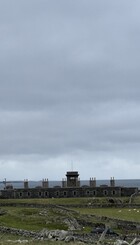
Lighting up the Skerryvore Lighthouse Shore Station - The Lighthouse Cottages
2025-05-30 • No comments • • Regeneration Capital Grant Fund
1 We need to repoint the external stonework and do work on the chimneys and roof of the 4 lighthouse cottages. No maintenance work has been done for many years and there has been major issues with damp and water damage in these 4 properties. There is a critical housing shortage on Tiree and in particular affordable housing. We have now 2 of the cottages on long term lease to locals and would like to make the other 2 habitable for long term lease. We would also like to use this opportunity to encourage young people on Tiree to consider construction and in particular stonemasonry as a possible career. The team we would use, have experience of running training programmes for school pupils to come and work on the site and learn some of the basic skills of maintainting heritage buildings. This added value to the project would bring a very useful experience to our local children who are disadvantaged at present from these type of careers activities. We would also offer to design a long term training programme for a local person so that we could have local skills to maintain the A listed heritage buildings on our site.
2 We funded work late last year on two of the chimneys by a stonemason specialising in these kind of listed buildings. He has advised that all the external walls, chimneys and roof require work done to preserve these wonderful buildings. The work he did was enough to sort the immediate issues of dampness coming from the chimneys. There is still some damp coming through the walls/windows. Also the other chimneys that we did not repair mean that two of the cottages are not fit for long term lease at the moment. Funding has been recieved by Argyll and Bute Council to allow us to the internal upgrading but we require major funding for all the external works so that we an offer 4 good quality upgraded affordable homes for locals. One of the issues has been lack of maintenance of all the A listed buildings on our site. There has been some repair work done but it has exaccerbated the problems due to lack of knowledge. These buildilng require specialist skills. If we can train up someone locally to do the basic ongoing maintenance through this project this would be of huge long term benefit to the Hynish Trust.
3 When we advertised the last cottage for lease we got 5 applicants. They were all local people wanting to come to live at Hynish. Our vision is to create a clachan type village at the Skerrryvore Shore Station in Hynish for people to live, play, learn and enjoy. The demand is there amongst the community for long term affordable housing and this is a relatively quick win to maintain the two leases we have and create another two. But more importantly to ensure the buildings are presrved for the long term future. So the refurbishment of the externals of these buildings would be transformational for the Hynish Trust. It would ensure that these buildings will be fit for purpose for the future. It also addresses the critical housing situation. Providing an opportunity for local children to experience somehting different as a possible career opportunity would be welcomed by the school and the community. If we can also get a local person trained up to be able to maintain all our buildings externally this would be a long term benefit to the community and create much needed local employment.
4 The project would start in March 26 and run to September 26.