
View mode
- Cards
- List
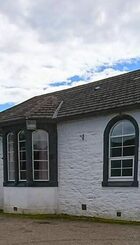
Sandbank Village Hall (SVH) – The Next 100 Years!
2025-06-02 • No comments • • Regeneration Capital Grant Fund
- What do you want to do? Describe the activities your project will carry out and list any partner organisations.
- SVH Management Committee is seeking funding to redevelop the village hall in a rural community where there are no other community facilities. The hall hosts a range of groups and services, such as yoga classes, family celebrations, presentations e.g. local wind farm, fundraising events and acts as a polling station during local and national elections.
- Why is your project needed? Summarise the evidence showing your community needs this project. Help!
Today, SVH remains a vital institution within the village, embodying a rich heritage and an unwavering commitment to community values. It stands as a reminder of the village's history, a venue for collective memory, and a beacon of fellowship. The hall continues to host a diverse range of activities, adapting to contemporary needs while preserving its historical essence.
- What positive changes will your project bring about? Describe the benefits for participants. Help!
The SVH project will help deliver community needs which evidence: -
- Clear and genuine need.
- Relevant and appropriate consultation.
- The ability to keep the site in good order and well maintained once the project is complete.
- Reasonable costs which offer good value.
- The ability to deliver the project on time and on budget.
- The project’s outcomes will benefit the natural, social or built environment and make a positive impact on local communities.
- How long will your project run for? Provide the project duration and estimated start date.
From 1st April 2025 to 31 March 2026
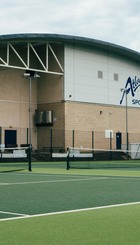
Renewing the fabric of Atlantis Leisure for the next Generation
2025-06-02 • No comments • • Regeneration Capital Grant Fund
Atlantis Leisure is a vibrant, community-run health and wellbeing hub in the heart of Oban. For over 30 years, we’ve been a lifeline for locals of all ages - a place where toddlers learn to swim, teens train with sports clubs, adults improve their fitness and older residents stay active and connected. As a registered charity and social enterprise, every penny we earn is reinvested. Our huge range of facilities are designed to support active, healthy lives. We work with schools, NHS partners, and community groups to deliver inclusive, high-impact services. With over 150,000 visits a year and no other facility like it for 95 miles, Atlantis isn’t just a leisure centre - it’s the beating heart of our community.
This application comprises separate projects that are also listed on Aspiring Places indivdiually but we thought it made sense to group them together as a single proposal for the purposes of RCGF too:
1. What do you want to do? We propose a multi-strand capital regeneration programme at Atlantis Leisure — a vital, community-owned asset serving Oban and surrounding remote rural areas — to deliver large-scale, community-led change aligned with RCGF's aims that breathes new life into an over 50 year old facility.
This project brings together three deliverable, community-prioritised infrastructure improvements:
- Installation of rooftop solar panels and battery storage: significanty reducing carbon emissions, lowering long-term operating costs and contributing to Net Zero targets. 160k
- Expansion of Atlantis’ gym: a two-storey extension to accommodate growing community demand, support inclusive programmes like Elevate & Stay Active, and provide flexible meeting and office space to host outreach services and community partners. 175k
- Creation of accessible changing facility: reconfiguring existing internal space, to provide a dignified, fully inclusive changing area to support disabled users 50k
- Restoration of end of life outdoor sports pitch: bringing an end-of-life, unusable asset back into service, enabling schools, clubs, and informal groups to use it year-round, relieving pressure from indoor space and boosting physical activity levels. 90k
- Restoration of Sports Hall Roof: rectifying end-of-life aspects of the roofing. 150,000k
2. Why is your project needed? Atlantis Leisure is a community-run registered charity and social enterprise that delivers year-round access to sport, physical activity, and wellbeing services. We are the only such facility within a 95-mile radius and serve over 150,000 users annually — yet key parts of our infrastructure are now limiting access, affordability, and impact.
- The pitch is end-of-life and unusable, with back-up facilities constrained by a statutory noise order.
- We've run out of room in our existing gym facility meaning vital communtiy programmes like Healthy Options are unable to operate properly
- There is no suitable changing space for users with complex access needs, meaning many are excluded from participation.
- Energy costs are surging, making it harder to deliver affordable access and sustain services for low-income families.
The project will regenerate these essential community assets, futureproof our building, reduce inequalities in access, and enable Atlantis to deliver sustainable social value for decades to come — directly supporting the RCGF’s priorities around deprivation, climate, inclusion, and place-based transformation.
3. What positive changes will your project bring about?
- Inclusive Infrastructure: The accessible changing space addresses long-standing inequality, empowering disabled users to participate fully & independently.
- Net-Zero Progress: Solar & battery systems will directly reduce carbon emissions, support national climate goals, & make Atlantis more financially sustainable.
- Renewed Community Space: The front pitch transformation will reinstate valuable outdoor capacity, expanding options for schools, clubs, and families.
- Address Capacity Issues: Expanding the gym answers a growing problem with existing capacity.
- Child Poverty Impact: Reducing running costs helps us to maintain subsidised programmes, removing financial barriers to physical & social wellbeing.
- Place-Based Renewal: This project aligns with the Place Principle and National Strategy for Economic Transformation by investing in a community-anchored asset with cross-cutting impact.
Together, these outcomes represent transformational, community-led regeneration that will enhance the resilience, health, and wellbeing of Oban.
4. How long will your project run for?
The project is fully deliverable within FY 2026–27.
- Start: Early 2026
- End: March 2027
- Drawdown Ready: All spend will be committed or completed within the terms of the RCGF.
- Delivery Approach: Projects will be managed by Atlantis Leisure’s Facilities Subgroup with oversight from the Board.
- Match Funding: Confirmed: Atlantis own contribution. Pending: we are actively pursuing applications and conversations with other funders including LES's CARES programme
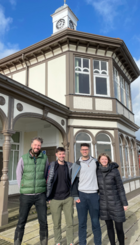
Dunoon Pier
2025-03-26 • No comments • • Regeneration Capital Grant Fund
Operating under the governance of the Dunoon Community Development Trust and in partnership with Argyll and Bute Council, the Save the Pier working group has been actively seeking funding and carrying out further research to progress the necessary technical studies needed to inform these types of developments.
The initial goal of the working group is to develop a robust, evidence-based feasibility study, providing a clear case for the pier’s redevelopment and its potential role within the future of the town’s wider marine infrastructure. Longer-term they hope to begin the process of the pier’s renovation.
The wider team —comprising volunteers with expertise in public sector infrastructure, finance, heritage preservation, project development and community engagement —has been engaging with stakeholders in the public and private sector, having discussions with potential funders, and laying the groundwork to ensure any future redevelopment is viable and sustainable.
Our Progress So Far
The project has involved extensive positive collaboration with Argyll and Bute Council, alongside wider stakeholder consultations, a public petition, and collaboration with advisors in major infrastructure, heritage conservation, and funding options.
Community Involvement
Community engagement will be essential to shaping the pier’s future. There has consistently been a lot of interest on social media and in the newspaper with large numbers of people getting behind the idea of Dunoon Pier being regenerated. It is clear that there is good community support for the idea and the working group welcomes the input of local residents, businesses, and local organisations as the project evolves.
At this stage, the focus is on gathering the necessary technical and financial evidence to determine what is achievable.
Next Steps
Funding is currently being secured to complete a feasibility study, which will provide a comprehensive assessment of the pier’s future potential. This study will form the foundation for securing funding to progress any future redevelopment. However, given the scale of the project, careful planning and a phased approach is required. We aim to complete this initial phase and be in a position to share the feasibility study by Summer 2025.
Looking Ahead
Public infrastructure projects of this scale take time, but the dedication of the team working with the support of the local authority and Dunoon Community Development Trust means that there is a good chance that this project will progress positively. The Dunoon Pier working group is committed to communicating on their progress and will provide regular updates via Dunoon Community Development Trust and partners as the project moves forward.
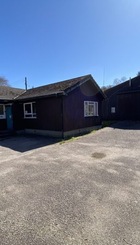
Creating a Cairnbaan Community Hub. Refurbishment of the old forestry buildings
2025-05-30 • No comments • • Regeneration Capital Grant Fund
1. What we want to achieve.
The Cairnbaan Community Trust, (SC052905) wants to refurbish the forestry buildings to provide a community gathering point and flexible workshop and event spaces. We want a community hub that can be used by the community for education such as crafts and Gaelic, health e.g. yoga and other activities, recreation and social gatherings, inside and outside and temporary office space for local entrepreneurs.
Our priority is the smaller of the two buildings which will provide space for community events and workshops, social meeting space, hot desks and a community kitchen. There is external space that can be developed to provide a community garden and outside event space. It is hoped in the future the larger of the two buildings can be developed to provide space for larger workshops and events.
We have divided the work into phases and we are currently seeking funding for phases 1 and 2.
Phase 0: This covers the procurement of the forestry buildings under a community asset transfer funded by the Scottish Land Fund and we have secured initial funding for essential repairs to both buildings to make them safe and weatherproof. The work will start when we take ownership on the 01/08/2025.
Phase 1: Is the refurbishment of the smaller building. This phase will change the internal layout of the building to create flexible spaces. This entails new partitions, doors, lighting and upgrade to the heating. Additional facilities, external and internal, will be needed for disabled and users with special needs. We also aim to fit a community kitchen and social space for coffee mornings. Finally we need to replace windows and install new furnishings and fittings.
Phase 2: Is the landscaping and provision of a community garden and outdoor space.
Phase 3: Is the refurbishment and fitting out of the larger building. In this phase we also plan to look at energy efficiency improvements, e.g. heat pumps and solar panels.
2. Why our project is needed
Currently there is no community centre to provide a focal point or resources for the community. There is a risk of social isolation amongst our older population and there are no facilities for the young people in our village. Community cohesion is being eroded.
We commissioned a feasibility report through Community Enterprise which highlighted the following points. Accessing facilities is difficult without a car, the minimal bus service is a school service with no evening or Sunday services. There are no shops, medical or other services in the village. Despite scoring highly in other domains the area falls into the 10% most deprived areas in Scotland in terms of access to services in relation to the Scottish indices of multiple deprivation. Feedback from local people highlighted that a primary need in the community is an indoor social area and meeting space.
3. The positive changes our project will bring
Our vision is to reduce isolation, improve community life and reflect the cultural, environment and historic heritage of the area. The current priorities for the CCT are.
- Bringing the community together to enable opportunities for social interaction and growth.
- Advancement of arts, heritage, culture and science.
- The provision and organization of recreational facilities to improve the quality of life for the community.
- Improving the environment including education about the environment, culture and history.
- The relief of thos in need either because of age, ill health, disability or financial hardship.
The refurbishment of the buidings will provide a focal point for the community and the resources to bring the community together especially those that feel isolated. It will provide resources for all ages across the community and give everyone opportunities for development and a sense of purpose and indentity.
Through current engagement with the local community we have already identified skills and volunteers that can contribute to the refurbishment which will foster community involvement from the outset
4. How long will our project run
Phase 1 and 2 of the project will start on: 05/01/2026
The project will run for: 15 months
Our Business plan and the Feasibility report are available on request. Unfortunately the file size was too big to attach.
South Kintyre Growing Project
2025-05-29 • No comments • • Regeneration Capital Grant Fund
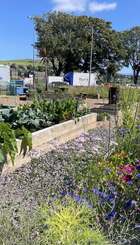
SKDT already operates the gateway garden (under licence from ACHA), as well as the putting green and herb garden (under licence from ABC) and the Robert Black Memorial Helipad (owner operator).
SKDT has well developed plans in place for these areas, which we would obviously like to see being well used by the community.
The creation of the Gateway Garden over the last 18 months has provided opportunities for food growing, education and intergenerational activity which are identified actions in the Campbeltown Community Action Plan (2022 – 2027). The Growing Project will also go some way towards developing local resilience and food security.
The initial redevelopment of the Gateway Garden, which is in a prominent location at the entrance to the town, has given impetus to other volunteers and potential gardeners to come forward.
Unfortunately, the limited size of the current garden area has restricted the number of growing plots available. The Growing Project would allow us to identify other suitable growing areas which we can develop in a gradual and progressive way, The, now ceased, Campbeltown Community Garden has donated their remaining plant and equipment to SKDT, now in storage, which will give us a head start in developing new growing spaces.
We also have a large selection of lawnmowers, gardening tools, hoses and other items which we can use for this project. However we will still need to acquire additional equipment and sundries (gloves, boots, compost, fertiliser etc) to allow us to proceed.
We will look to access additional funding to develop the project further via local funding through e.g. Common Good Fund, MACC and Campbeltown Community Windfarm Fund.
The main focus of this expansive project will be to attract, retain and train volunteers to get their hands dirty and get digging, weeding and planting.
As well as our own volunteers, there is another group of volunteers who have been looking after the bus terminal area. We will work alongside and support both of these groups. We will access additional training and advice from a network of community gardens throughout Scotland.
We would also continue and expand our work with the local schools on developing their own gardens and teaching kids the benefits of growing your own food. This would also allow for some important intergenerational activities which improve the lives of young and old.
We will also support and lobby for the provision of allotments for people to grow their own produce.