
View mode
- Cards
- List

MACPool Activity Hub: Sustainability
2025-05-22 • No comments • • Regeneration Capital Grant Fund
MACPool Activity Hub is a local community hub settled within the rural area of Lochgilphead. We currently service the area of Mid Argyll, where the population is approximately 6,000 people. On an average week, we will provide services such as specialised swimming sessions, fitness classes and Learn to Swim lessons, where over 500 regular participants will attend the Activity Hub.
MACPool Activity Hub works closely with rural school with promoting Water Safety Sessions and scheduled blocks of weekly lessons to pupils. The main Learn to Swim program caters to more than 220 participants from a 25 mile radius on a weekly basis, with ages ranging from 4-75 years old.
We offer a range of programs designed to specialise in different needs such as our Toddler Time sessions to classes such as HyrdoMobility, a senior exercise class, focusing on water-based exercises to strengthen the core and increase stability.
In collaboration with RMFitness and the NHS Living Well Program, MACPool Activity Hub has been assisting with the rehabilitation within the senior community, providing a bespoke area to re-build confidence, both in and out of the water.
We also host Additional Support Needs (ASN) and Young Carer sessions in partnership with the Mid Argyll Youth Development Services (MAYDS), providing a safe space for those in the community who may not otherwise have access to such spaces.
In accordance with our sustainability principles, MACPool Activity Hub is a part of the Renewable Heating Incentive (RHI) scheme. Therefore, the Hub uses a biomass boiler that is fuelled by woodchips to produce the necessary heating for the swimming pool and hot water systems. MACPool Activity Hub is also a part of the Feed In Tariff (FIT) scheme and have over 100 solar panels, which generate renewable electricity.
During previous winters, however, the quality of the fuel source has declined, causing our boilers to malfunction. It is essential that our boilers remain fully operational to comply with regulations concerning water and air temperatures. When we do not meet these regulations, we are forced to close the pool, cancelling valuable swimming lessons, fitness classes and pre-programmed sessions, thus losing credibility and revenue.
Our vision is to expand on the foundations of what we have created so far, improving integral community bonds, while seeking other connections to become a cornerstone of the community. To sustain our efforts, we aim to secure funding for a secondary heating source and to upgrade the storage silo, to allow us to change over from woodchips to wood pellets. This will enable us to remain in the RHI scheme while continuing to develop our programs and timetable, while also fostering partnerships that align with the needs of the community.
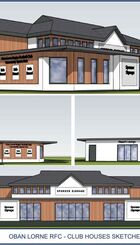
Oban Lorne RFC's Community Sports & Events Hub (Phase 1-2)
2025-05-21 • No comments • • Regeneration Capital Grant Fund
1. What do you want to do?
We aim to develop the Oban Sports & Events Hub—a modern, inclusive facility featuring a multi-sport clubhouse, floodlit pitches, gym, running track, and event spaces. This hub will serve as a central venue for sports, cultural events, and community gatherings, enhancing opportunities for physical activity and social engagement in Oban and the surrounding areas.
2. Why is your project needed?
Oban's existing sports infrastructure is outdated and lacks accessibility, limiting opportunities for participation in sports and community events. The current facilities do not meet the needs of the growing population, particularly youth and individuals with disabilities. By providing modern, accessible facilities, the Oban Sports & Events Hub will address these gaps, promoting inclusivity and community well-being.
3. What positive changes will your project bring about?
The hub will:
-
Enhance Health and Well-being: Provide facilities that encourage physical activity across all age groups.
-
Promote Inclusivity: Ensure accessible design for individuals with disabilities.
-
Support Youth Development: Offer programs and spaces dedicated to youth engagement.
-
Boost Local Economy: Attract events and visitors, supporting local businesses.
-
Foster Community Cohesion: Serve as a gathering place for diverse community groups.
4. How long will your project run for?
The project is planned over multiple phases and is subject to funding and lease agreements. The project has been designed to be flexible but includes:
-
Phase 1 (2025–mid 2026): Construction of the clubhouse, installation of floodlights, and development of the main pitch.
-
Phase 2 (mid–late 2026): Addition of a running track and 4G area.
-
Phase 3–4 (2027): Redevelopment of the bottom pitch and support of potential construction of the skate park.
-
Phases 5–8 (2028–2032): Expansion to include additional facilities and infrastructure improvements.
Partnerships:
We plan to collaborate with:
-
Local Sports Clubs: Oban Lorne RFC, Oban Saints FC, Oban Camanachd, and others.
-
Educational Institutions: Local schools and youth organisations, including the school hostel.
-
Community Groups: Oban Community Skate Park Committee and cultural organisations.
-
Local Businesses & Charities: Atlantis Leisure, Adventure Oban, Happy Wee Health Club.
-
Local Authorities: Argyll and Bute Council for planning and support.
-
National Event Organisers
These partnerships will ensure the hub meets the diverse needs of the community and operates sustainably.

Complete our lifeline link road!
2025-06-02 • No comments • • Regeneration Capital Grant Fund
In 2021 and 2022, IKDT secured funding to construst 1.79KM of brand new road connecting the North and South of the island. This project has been in the pipeline for many decades and has connected up the two different communities and is allowing our island to thrive as one. Just after we have secured the funding for the 2nd stage of the project, the tar topping, war broke out in Ukraine. Apart from the obvious humanitarian crisis, this had an instant impact on the price of all the raw materials required for surfacing. It meant we had to scale stage 2 back and make do with tarring the new built section of the road with a single layer of tar and leave approx 500 metres of road in an unbound, farm track state. Our plan for stage 2 had been to deliver 2 layers of tar over the new road (1.79km) and the 500m of existing road when we could petition the council to adopt the road as it connects up the existing council road to several council tax paying households. As it stands, while the road is in use and is hugely beneficial to life on the island however the maintenance burden on IKDT is not ideal. The council will not consider adoption until the road is brought up to the standard we had planned for stage 2 so we are hoping to complete the job. Adoption is key to the long term future of the road and indeed to whole community as it will allow unfettered access to all including vital services, emergency vehicles and access to the lifeline ferry service. The surfacing could be delivered in one week but the effects would be felt for generations to come. We would hope to continue the excellent working relationship with A&B Roads department to help deliver the best value for money possible.
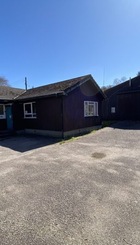
Creating a Cairnbaan Community Hub. Refurbishment of the old forestry buildings
2025-05-30 • No comments • • Regeneration Capital Grant Fund
1. What we want to achieve.
The Cairnbaan Community Trust, (SC052905) wants to refurbish the forestry buildings to provide a community gathering point and flexible workshop and event spaces. We want a community hub that can be used by the community for education such as crafts and Gaelic, health e.g. yoga and other activities, recreation and social gatherings, inside and outside and temporary office space for local entrepreneurs.
Our priority is the smaller of the two buildings which will provide space for community events and workshops, social meeting space, hot desks and a community kitchen. There is external space that can be developed to provide a community garden and outside event space. It is hoped in the future the larger of the two buildings can be developed to provide space for larger workshops and events.
We have divided the work into phases and we are currently seeking funding for phases 1 and 2.
Phase 0: This covers the procurement of the forestry buildings under a community asset transfer funded by the Scottish Land Fund and we have secured initial funding for essential repairs to both buildings to make them safe and weatherproof. The work will start when we take ownership on the 01/08/2025.
Phase 1: Is the refurbishment of the smaller building. This phase will change the internal layout of the building to create flexible spaces. This entails new partitions, doors, lighting and upgrade to the heating. Additional facilities, external and internal, will be needed for disabled and users with special needs. We also aim to fit a community kitchen and social space for coffee mornings. Finally we need to replace windows and install new furnishings and fittings.
Phase 2: Is the landscaping and provision of a community garden and outdoor space.
Phase 3: Is the refurbishment and fitting out of the larger building. In this phase we also plan to look at energy efficiency improvements, e.g. heat pumps and solar panels.
2. Why our project is needed
Currently there is no community centre to provide a focal point or resources for the community. There is a risk of social isolation amongst our older population and there are no facilities for the young people in our village. Community cohesion is being eroded.
We commissioned a feasibility report through Community Enterprise which highlighted the following points. Accessing facilities is difficult without a car, the minimal bus service is a school service with no evening or Sunday services. There are no shops, medical or other services in the village. Despite scoring highly in other domains the area falls into the 10% most deprived areas in Scotland in terms of access to services in relation to the Scottish indices of multiple deprivation. Feedback from local people highlighted that a primary need in the community is an indoor social area and meeting space.
3. The positive changes our project will bring
Our vision is to reduce isolation, improve community life and reflect the cultural, environment and historic heritage of the area. The current priorities for the CCT are.
- Bringing the community together to enable opportunities for social interaction and growth.
- Advancement of arts, heritage, culture and science.
- The provision and organization of recreational facilities to improve the quality of life for the community.
- Improving the environment including education about the environment, culture and history.
- The relief of thos in need either because of age, ill health, disability or financial hardship.
The refurbishment of the buidings will provide a focal point for the community and the resources to bring the community together especially those that feel isolated. It will provide resources for all ages across the community and give everyone opportunities for development and a sense of purpose and indentity.
Through current engagement with the local community we have already identified skills and volunteers that can contribute to the refurbishment which will foster community involvement from the outset
4. How long will our project run
Phase 1 and 2 of the project will start on: 05/01/2026
The project will run for: 15 months
Our Business plan and the Feasibility report are available on request. Unfortunately the file size was too big to attach.
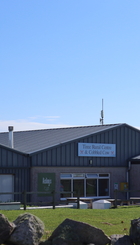
Tiree & Coll Community Vet Practice Project
2025-05-30 • No comments • • Regeneration Capital Grant Fund
What do we want to do?
This project seeks to transform an existing community space at the Tiree Rural Centre – previously used as a café – into a community-owned vet practice serving the islands of Coll and Tiree. The Rural Centre hosts the island’s cattle and sheep market along with an exhibition showing all aspects of crofting and wildlife on Tiree. It plays a leading role in preserving Tiree’s rich crofting heritage and, together with its central location on the island, is well-placed to host a community vet practice. This represents a significant investment and regeneration project for both Tiree and Coll, and would contribute positively to local economies, which revolve around crofting.
This project is led by a consortium of island stakeholders which includes Tiree Rural Development (which manage the Rural Centre), Tiree Community Development Trust, various crofters and community representatives, and the current vet. This steering group provides strategic oversight and represents a community-led approach focused on safeguarding a key island service and a shared belief that something must be done before it is too late.
To that end, the Tiree Community Development Trust commissioned a feasibility study to investigate renovating the available, currently vacant space at the Rural Centre into a vet practice. With a full design and accurate costs now in place, the consortium are now in a position to commence a build phase of the project, and are actively seeking funding to make this important project a reality.
Why is our project needed?
A vet is absolutely critical to both Tiree and Coll. Without an island vet, crofting largely becomes untenable, as crofters need access to veterinary services to keep animals and ensure their welfare. Crucially, Tiree’s culture, history, economy, and its unique machair landscape are all strongly linked to crofting. In addition to running their crofts, crofters often hold multiple jobs and community roles, and are essential to island life.
As crofting is the island’s primary industry, the loss of a vet would have dire consequences for the local economy. This would likely lead to emigration and a decline in the numbers of families living on the island. Even a few families leaving would have a significant impact on services, and could spark the further closure of lifeline services such as the school, GP surgery, and local businesses – a gradual process often seen in other small Scottish islands once the population falls below a critical point. Once these key services are lost, we know from experience and research that they rarely return. This is due to the high cost of running services on islands, the challenges of setting up, and the dwindling economic returns and economies of scale. Remote islands are places where market failure is the norm, not the exception. The group recognises that the vet practice is one such service that the island cannot afford to lose.
Moreover, many residents keep small animals and pets; the operational and cost implications of relying on a mainland vet service for Tiree and Coll residents are significant, in some instances prohibitive. The vet also plays a central role in protecting the island’s unique wildlife and marine life, regularly attending call-outs to help stranded dolphins and seals, for example.
With our current vet looking to retire in the near future, we are keen to minimise barriers that an incoming vet faces. In the past, it has been difficult to recruit and retain vet capacity, and recent shortages in the sector, combined with a low financial return of investing in an island-based vet practice, have made this challenge more acute. Additionally, the current vet operates out of a small and temporary space which is unlikely to meet future RCVS standards and does not fully meet the dynamic needs of an island vet. A high-quality, affordable, and long-term practice ensures that the prospect of moving to Tiree to take over the practice becomes much more attractive and financially viable.
What positive changes will our project bring about?
This project provides key benefits to crofters and the wider community on both Tiree and Coll:
- A bespoke, compliant, and modern vet practice will make it easier to attract an incoming vet to the island, and retain them once they have arrived.
- It improves the standard of care and contributes positively to animal welfare, as well as providing a better space for a vet to operate out of.
- Securing an appropriate practice space for Tiree and Coll safeguards the entire crofting sector, the island’s primary industry.
- Security of tenure for the vet, as well as a stable rental income for a community group dedicated to improving conditions for crofters and wildlife on Tiree.
- Making better use of existing assets, and optimising design to factor in environmental improvements.
- Tiree and Coll pet owners are guaranteed access to veterinary care without having to rely on mainland services, which can be difficult and expensive to access – especially during emergencies.
- The project contributes to the wider regeneration of Tiree’s existing community-owned assets, and will play a key role in Tiree Rural Centre’s future.
- A lifeline island service is maintained, contributing to the overall viability of Tiree’s small, unique, and thriving community.
How long will our project run for?
The project will start on: 01/03/2026
The project will run for : 12 months